Cancer Pain Management
In Maryland, Pennsylvania, Florida, and Virginia
Cancer pain, a common symptom in individuals battling various forms of this disease, can be caused by the cancer itself or as a side effect of treatments. It can manifest as a dull ache, a sharp shooting pain, or even a constant throbbing sensation. At Pain and Spine Specialists, we offer expert treatments for cancer pain to help alleviate symptoms such as persistent discomfort, difficulty sleeping due to pain, and decreased mobility. Our goal is to improve your quality of life and provide relief in your fight against cancer.
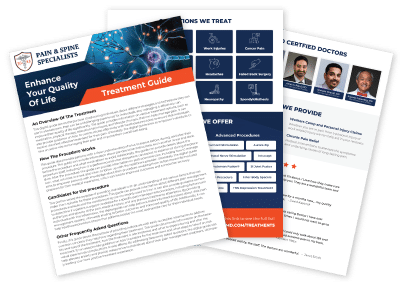
Digital Guide
Treatment overview and more!
Comprehensive Cancer Pain Management
A side effect of cancer is often pain which can further diminish a patient's ability to function. Cancer pain affects a significant population of individuals battling various forms of cancer. It's prevalent not only in advanced stages but can also be present in the early stages of the disease, impacting the quality of life drastically.
If you'd like to learn more about the causes, symptoms, and treatments for cancer pain, feel free to explore further using the navigation buttons below. Our team of specialists at Pain and Spine Specialists are dedicated to treatment for cancer pain, ready to provide consultation and personalized treatment plans.
To schedule a new patient consultation, simply submit a contact form or give us a call. Early intervention is crucial in managing cancer pain effectively, and our team is here to help you take that first step toward relief. We have offices in Florida, Maryland, Pennsylvania, and Virginia.

[embed]https://www.youtube.com/watch?v=niH3R-9yEnQ&ab_channel=PainandSpineSpecialists[/embed]

Request An Appointment

What Patients Are Saying
Great office, good people. Been there quite a few years. Never a problem. Leave them a message, they always respond. I've had six back surgeries 2knees and right shoulder. Gregg keeps my chronic debilitating pain managed well so I can still live my life best I can. Im so grateful.
Jenny Martins / google review
Dr. Rao. I can't find the words to tell you how much he has meant to me. I followed him from an old practice to his very new high tech office. They offer so many different areas of assistance to those with issues from nutrition to spinal surgery... and much more. His office is professional.
Mom To2 / vitals
Dr. Rao is such an amazing doctor! During my first visit, he never tried to rush through my appt.; he genuinely listened to all my concerns and then took his time to explain to me in detail all his recommendations and how they would help me.
Nikki / healthgrades
Cancer Pain Treatment Guide
Digital Guide
Download our comprehensive digital guide on cancer pain treatment guidelines, provider information, treatment locations, and answers to frequently asked questions. Empower yourself with knowledge and take control of your pain management journey.

More Resources
Access to our Cancer Pain guide, pain quiz, FAQ's, and patient reviews.


We Accept All Insurances
Individualized Patient Care
Board Certified Doctors
Seen Within Two Weeks
Chronic Pain Management for Cancer Patients
Millions of Americans today have a history of cancer; for most of them, living with cancer is the most significant challenge they have ever faced. One of the unfortunate realities of living with cancer is the physical pain. Not everyone with cancer will experience pain, but nearly one out of three people undergoing cancer treatment will experience pain at some point. Cancer pain can be managed with medication in addition to other therapies.
Pain is one of the most common issues cancer patients deal with. Cancer pain can affect a person's ability to function, on top of what the cancer itself and treatment do to the body. Younger patients tend to deal with cancer than older patients, and the more advanced the cancer is, the more intense the pain. Even after treatment, people can still experience pain for some time.
However, patients are not alone in their fight against cancer and the pain that might result from it. If you are dealing with pain from cancer or cancer treatment, addressing your pain as soon as possible is essential to treat it appropriately. Cancer pain may not go away thoroughly after treatment. Still, an experienced pain management doctor can help reduce the pain levels and hopefully allow you to go relatively pain-free or with significantly lower amounts of pain than before.
How Does Cancer Develop?
Cancer is abnormal cell growth that may spread to other body parts. Cancer can develop in any part of the body and can potentially cause pain.
Cells in the body grow, multiply, grow old, and die, with new cells taking their place. When this process is disrupted, damaged cells multiply when they are not supposed to, and the cells form tumors. There are cancerous or benign tumors, and cancerous tumors spread into surrounding tissue.
Types of Cancer
There are over one hundred types of cancer. Some types of cancers that start in specific cells are:
- Carcinoma: Carcinoma is the most common type of cancer, originating in the epithelial cells. Many cancers can occur in the breast, colon, and prostate are adenocarcinomas. Some cancers that form in the bladder, ureters, and kidneys are transitional cell carcinomas.
- Sarcoma: Sorcoma is a type of cancer that occurs in the bones and soft tissues, including muscles, fat, blood vessels, lymph vessels, tendons, and ligaments. Osteosarcoma is the most common form of bone cancer.
- Leukemia: Cancers start in the bone marrow, and instead of forming tumors, abnormal white blood cells increase in the blood and overtake the normal cells. Leukemia can cause the body to struggle to control bleeding or fight off infections. There are four main types of leukemia, including acute and lymphoblastic or myeloid cancer.
- Lymphoma: Lymphoma is a type of cancer where abnormal lymphocytes gather in the lymph nodes and vessels. Lymphocytes are white blood cells that fight off disease. There are two major types of lymphoma, which are Hodgkin's lymphoma and Non-Hodgkin's lymphoma. Hodgkin's lymphoma is lymphocytes known as Reed-Sternberg cells and form from B cells. Non-Hodgkin lymphoma is a cancer that forms from B cells or T cells.
- Melanoma: Also known as skin cancer, melanoma starts in melanocyte cells, which produce melanin or skin pigmentation.
Causes of Cancer Pain
Cancer pain can arise from various sources, and it often varies greatly from one person to another.
Some common causes of cancer pain include:
- Tumor Pain: As a tumor grows, it can press on nerves, bones, or organs, leading to pain. This pressure can disrupt the normal functions of these body parts and cause significant discomfort.
- Pain from Cancer Treatments: Procedures such as surgery, chemotherapy and radiation can also cause pain. This may be due to the therapy's direct impact on healthy tissues or side effects like mouth sores, diarrhea, or nerve damage.
- Metastasis: When cancer spreads, also known as metastasizes. to other parts of the body, it can cause pain. For instance, if cancer spreads to the bone, it can cause severe bone pain, limiting mobility.
- Infections or Inflammation: Pain in the joints and muscles of the body can occur due to the cancer or its treatment, leading to pain.
- Spinal Cord Compression: When a tumor spreads to the spine, it can press on the spinal cord. This compression can cause back or neck pain.
- Mucositis: Sores or inflammation of the mouth, known as mucositis, can result from cancer or its treatment.
- Ostealgia: Ostealgia is bone pain that is due to cancer which can grow to be unbearable.
- Peripheral Neuropathy: Numbness, tingling, swelling, or muscle weakness in the hands and feet can be the result of nerve damage from certain types of chemotherapy.
- Osteonecrosis or Avascular Necrosis: The death of bone tissue due to a lack of blood supply, known as osteonecrosis, can be quite painful.
- Phantom Pain: When a person has had an area of the body removed and feels pain where that missing body part was is known as phantom pain.
- Post-Mastectomy Pain Syndrome (PMPS): Post-mastectomy pain syndrome results from having breast cancer surgery to remove one or both breasts. Women who develop post-mastectomy pain syndrome have neuropathic pain in the chest wall, armpit, and arm, and it does not go away. Most women only have mild pain levels with PMPS, and it is estimated that 20% to 30% of women experience PMPS after surgery.
Risk Factors for Cancer Pain
While cancer pain can affect anyone with the disease, certain factors increase the risk, including:
- Type of Cancer: Some types of cancer are more likely to cause pain than others. For instance, cancers of the bone, pancreas, and lung are often associated with significant pain.
- Stage of Cancer: Patients with advanced stages of cancer are more likely to experience pain, as the cancer is more likely to have spread to multiple areas of the body. Stage 4 cancer pain management can help reduce pain symptoms.
- Personal Pain Threshold: Everyone has a different threshold for pain. Some people may feel pain more intensely than others, which can make managing cancer pain more challenging.
Remember, every individual's experience with cancer pain is unique. Understanding the potential causes and risk factors can help guide effective pain management for cancer pain patients. Always consult with your healthcare provider for a personalized approach to managing cancer pain.
Cancer Pain Symptoms
Pain associated with cancer can manifest in various ways and differ greatly from one person to another. Understanding the signs and symptoms is an essential first step in managing this type of pain effectively.
What does pain from cancer feel like?
- Constant or Intermittent Pain: The pain could possibly be a constant ache or it might come and go. It can be localized in one area, or it may affect multiple parts of the body.
- Sharp or Dull Pain: Some people describe cancer pain as sharp and stabbing, while others might experience it as a dull ache or heavy throbbing.
- Nerve Pain: Nerve pain can feel like a burning sensation, numbness, tingling, or "pins and needles". It often occurs when a tumor presses on nerves or invades nervous tissue.
- Phantom Pain: Phantom pain feels like it's coming from a part of the body that has been removed during surgery. It's common after operations like mastectomy or amputation.
- Painful Scars: After surgery, some patients may experience pain in the area of a surgical scar.
Variation in Symptoms Based on Severity
The severity of cancer pain can vary greatly, and the symptoms can change based on how severe the pain is.
- Mild Pain: In cases of mild pain, you might experience discomfort but are still able to engage in normal activities. The pain might be more of a nuisance than a major disruption to your daily life.
- Moderate Pain: With moderate pain, the discomfort begins to interfere with your daily activities. You might find it hard to concentrate or perform tasks that were once easy for you.
- Severe Pain: Severe pain can be debilitating, making it difficult or impossible to engage in normal activities. You might have trouble sleeping, eating, or even moving.
Remember, everyone's experience with cancer pain is unique. If you are unsure of how to deal with cancer pain, it's important to consult with your healthcare provider right away.
Cancer Pain Treatment
If you or a loved one is experiencing chronic cancer pain, there are effective treatment options that can help. Our cancer pain management specialists offer various treatments that we personalize to each patient to give them the relief they need. Treatment for chronic cancer pain is specific to the individual, and we provide a range of treatment options to help our patients.
Injection Therapies
Injection therapies involve injecting medication directly into the area causing pain. These treatments can provide rapid relief from types of cancer pain.
- Epidural Steroid Injection: A epidural steroid injection involves delivering anti-inflammatory medication into the epidural space around your spinal nerves. This method can provide quick pain relief by reducing nerve inflammation.
- Facet Joint Injections: A facet joint injection involves injecting a steroid into the facet joints of the spine to reduce inflammation and alleviate pain.
- Medial Branch Block: A medial branch block numbs the medial branch nerves connected to a specific facet joint. This can help determine if the joint is a source of pain.
- Stellate Ganglion Block: A stellate ganglion block injects local anesthetic near the stellate ganglion, a group of nerves in the neck. It can help with pain and other symptoms in the upper body.
- Sacroiliac Joint Injections: Sacroiliac joint injections involve injecting a local anesthetic and a steroid medication into the sacroiliac joint. This can help alleviate pain caused by inflammation or injury in the joint.
- Lumbar Sympathetic Block: A lumbar sympathetic block helps manage pain in the lower extremities.
- Trigger Point Injections: Trigger point injections are used to treat painful areas of muscle that contain trigger points, or knots of muscle that form when muscles do not relax.
- Hyaluronic Injections: Hyaluronic injections are used to treat knee osteoarthritis. They supplement the viscosity of joint fluid to relieve pain and improve mobility.
Advanced Interventional Procedures
We also offer advanced interventional procedures for more complex or persistent pain.
- Spinal Cord Stimulation: Spinal cord stimulation sends a low-voltage electrical current to the spinal cord to control chronic pain.
- Intrathecal Pain Pump: An intrathecal pain pump is a device that delivers medication directly to the spinal cord, providing significant pain control with smaller doses of the drug and fewer side effects.
- Peripheral Nerve Stimulation: Peripheral nerve stimulation sends electrical currents directly to the nerves causing pain.
- Radiofrequency Ablation: Radiofrequency ablation uses heat to reduce or stop the transmission of pain from specific nerves.
- Minuteman: The Minuteman Procedure is a minimally invasive spinal fusion procedure that helps stabilize the spine and reduce pain.
- Minimally Invasive Lumbar Decompression (MILD): MILD involves removing parts of the bone or soft tissue to relieve pressure and reduce pain.
- Aurora ZIP Lumbar Fusion: The Aurora ZIP is a type of spinal fusion surgery that can help alleviate chronic lower back pain.
- Vertiflex: Vertiflex is a procedure involves inserting a small spacer to relieve pressure on the nerves and alleviate pain.
- Sacroiliac Joint Fusion: Sacroiliac joint fusion is a surgical procedure that fuses the iliac bone to the spine to provide stability and reduce pain.
- The Intracept Procedure: The Intracept Procedure is a minimally invasive procedure that targets the basivertebral nerve to alleviate chronic low back pain.
Conventional Treatments for Cancer Pain
We incorporate conventional treatments into our comprehensive care plans.
- Cancer Pain Medication Management: Pain medication for cancer patients involves using medications, both prescription and over-the-counter, to control pain. The best pain medication for cancer patients depends on the type of cancer.
- Referrals to Physical Therapy: Physical therapy can be used to help improve mobility and strength, as well as to manage pain.
Alternative Pain Relief for Cancer Patients
Through our sister company, Shakthi Health and Wellness Center, we offer alternative therapies as well, such as:
- Acupuncture: Acupuncture involves inserting thin needles into specific points on the body to relieve pain.
- Infrared Sauna: Infrared sauna uses infrared light to create heat that helps relax muscles and relieve tension and pain.
- Amethyst BioMat: The Amethyst BioMat uses far infrared rays and negative ions to promote relaxation and pain relief.
- IV Therapy: IV therapy involves infusing vitamins, minerals, and other nutrients directly into the bloodstream to improve overall health and wellness.
- Lymphatic Enhancement: Lymphatic enhancement uses a machine to stimulate the lymphatic system and improve its function.
- Photobiomodulation: Photobiomodulation is a non-invasive therapy that uses light to stimulate, heal, regenerate, and protect tissue.
- Transcranial Magnetic Stimulation: TMS is a noninvasive procedure that uses magnetic fields to stimulate nerve cells in the brain to improve symptoms of depression and other conditions.
Cancer Pain Relief at Home
In addition to pain medicine for cancer, there are several ways to manage cancer pain at home. These techniques can complement your medical treatment.
- Relaxation Techniques: Relaxation techniques such as deep breathing, visualization, progressive muscle relaxation, and meditation can help manage cancer pain. These methods can reduce stress and tension, promoting a sense of well-being that can help ease the perception of pain.
- Regular Exercise: While it may seem counterintuitive, regular exercise can actually help reduce pain. Light activities such as walking or stretching can help strengthen your body, increase your energy levels, and improve your mood, all of which can help in managing pain.
- Heat and Cold Therapy: Heat and cold therapy can also be beneficial. A warm bath or a heated pad can help soothe stiff, aching muscles, while an ice pack can help numb the area and reduce inflammation.
- Healthy Eating: Maintaining a healthy diet can also contribute to pain management. Certain foods have anti-inflammatory properties that can help reduce pain. Additionally, staying well-nourished can help keep your body strong and better able to fight off illness.
Our expert team at Pain and Spine Specialists is dedicated to helping you with the management of cancer pain. We'll work closely with you to develop a personalized treatment plan tailored to your unique needs and circumstances.
Cancer and Pain Management
Pain and Spine Specialists play a critical role in treating cancer pain. We utilize a variety of techniques to help manage cancer pain and improve the lives of patients dealing with cancer.
Comprehensive Evaluation
Our Pain and Spine Specialists team starts by conducting a comprehensive evaluation of the patient. This includes a detailed review of the patient's medical history, physical examination, and diagnostic tests such as X-rays or MRI scans to pinpoint the exact source of the pain.
Personalized Treatment Plans
Based on the evaluation, we develop a personalized treatment plan tailored to the patient's specific needs and circumstances. The plan may include a combination of medication management, interventional procedures, physical therapy, and alternative therapies.
Interventional Procedures
Our specialists are skilled in performing various interventional procedures to manage cancer pain. This can include nerve blocks, spinal cord stimulation, radiofrequency ablation, and injection therapies. These procedures can provide substantial relief from cancer-related pain.
Collaborative Care
We often work in a multidisciplinary team alongside oncologists, surgeons, radiologists, and other healthcare professionals. This collaborative approach ensures all aspects of the patient's health are considered in managing their pain.
Ongoing Management and Support
Managing cancer pain is an ongoing process. We at Pain and Spine Specialists provide continuous support and adjust treatment plans as necessary based on the patient's progress and any changes in their condition.
Education and Empowerment
Our Pain and Spine Specialists team also play a vital role in educating patients about their condition and treatment options. They empower patients to take an active role in managing their pain.


About Us
We are a comprehensive pain management practice with board-certified Cancer Pain doctors in Maryland, Pennsylvania, and Virginia that specialize in innovative treatments for Cancer Pain
Digital Guide
View our providers, locations, services, and patient reviews.
More Resources
Here is a list of resources that were discussed on this page:
Cancer Pain Treatments
Patients diagnosed with Cancer Pain may be good candidates for the following treatments.
Related Pain Regions
Cancer Pain is often caused by the following conditions.

Find a Location
If you are searching for "back pain treatment near me" then click button to search by zip-code.
Contact Us
Suffering from cancer related pain? Let our specialists help. Contact us today for personalized treatment options.

Schedule Appointment

Ask A General Question
Ask A Question

Billing / Insurance Question
Billing / Insurance

Cancel / Reschedule Request
Cancel / Reschedule
*We accept workers' comp and personal injury claim patients
*We accept workers' comp and personal injury claim patients
Appointment FAQ's
We Accept All Insurances!
That includes Medicare and state Medicaid.
Usually within one week of the initial call.
Appointments can be schedule by phone or through our contact form here.
At Pain and Spine Specialists we provide comprehensive pain care while offering the most up-to-date minimally invasive techniques. Our ethos is to treat each patient (and potential patient) as if they were a family member.
At Pain and Spine Specialists we want to provide the most efficient and pleasurable experience possible. As in all medical facilities, we have certain policies in place to ensure that you receive the time you require to address your needs as well as enhance your experience while in our care.
We encourage patient feedback to better improve your experience. We strive to create a friendly and warm environment where patients feel their voices are heard and validated.
Meet Our Team
Cancer Pain Doctors in Maryland, Pennsylvania, Florida and Virginia
You don't need to search online for "cancer pain management doctors near me". At Pain and Spine Specialists, our cancer pain specialists stand at the forefront of pain management. With over 20 years of experience treating chronic pain, we're committed to helping our patients find relief, improve their day-to-day lives, and avoid chronic pain after cancer treatment. Each of our specialists is board-certified and has undergone extensive training in pain management.