Vertiflex Treatment
In Maryland, Pennsylvania, Florida and Virginia
Vertiflex treatment offers an innovative new way to treat lumbar spinal stenosis. It is a minimally invasive procedure that uses a Vertiflex implant to restore space between the vertebrae and lift pressure off compressed nerves that cause pain.
Digital Guide
Treatment overview and more!
The Vertiflex Procedure for Chronic Pain Relief
Vertiflex is a small spacer implanted between vertebrae to alleviate pressure on compressed nerves, providing lasting pain relief. This minimally invasive approach doesn't require the removal of bone or tissue, resulting in minimized blood loss and reduced risk of complications. It also means you can go home on the same day, with a shorter recovery than more invasive treatments.
If you want to learn more about the procedure, we invite you to explore further by using the navigation buttons below. You'll find more information about whether you are a suitable candidate for the procedure, recovery tips, and answers to frequently asked questions.
When you're ready to take the next step and speak with one of our board-certified pain specialists about The Veriflex Procedure, we're here for you. Please submit a contact form or give us a call to schedule your new patient consultation. During your initial consultation, we will evaluate your current health condition and medical history and review any previous imaging to determine whether Vertiflex is the right choice for you.


What Patients Are Saying
Great office, good people. Been there quite a few years. Never a problem. Leave them a message, they always respond. I've had six back surgeries 2knees and right shoulder. Gregg keeps my chronic debilitating pain managed well so I can still live my life best I can. Im so grateful.
Jenny Martins / google review
Dr. Rao. I can't find the words to tell you how much he has meant to me. I followed him from an old practice to his very new high tech office. They offer so many different areas of assistance to those with issues from nutrition to spinal surgery... and much more. His office is professional.
Mom To2 / vitals
Dr. Rao is such an amazing doctor! During my first visit, he never tried to rush through my appt.; he genuinely listened to all my concerns and then took his time to explain to me in detail all his recommendations and how they would help me.
Nikki / healthgrades
Vertiflex Treatment Treatment Guide
Vertiflex Treatment Digital Guide
Our board-certified back pain specialist doctors specialize in minimally invasive treatments like Vertiflex Treatment. Download our guide to learn more about our comprehensive services focussed on pain management for chronic pain.

More Resources
Access to our Vertiflex Treatment guide, pain quiz, FAQ's, and patient reviews.


We Accept All Insurances
Individualized Patient Care
Board Certified Doctors
Seen Within Two Weeks
Vertiflex Spinal Spacer for Lumbar Spinal Stenosis
If you're struggling with lumbar spinal stenosis (LSS) and seeking an effective, minimally invasive interventional treatment option, Vertiflex may be the solution you need. The Vertiflex spine procedure is FDA-approved and offers an alternative to traditional treatments. This approach uses a small spacer to create space between vertebrae, providing lasting relief from pain caused by LSS.

Understanding Lumbar Spinal Stenosis
Lumbar spinal stenosis is a common condition that occurs when the spaces within the spine narrow, putting pressure on the nerves and causing chronic pain. This narrowing can result from age-related wear and tear, arthritis, or other spinal issues.
Symptoms of LSS:
Typical symptoms of lumbar spinal stenosis are:
- Lower Back Pain
- Leg Pain or Numbness
- Difficulty Walking or Balancing
- Leg Weakness
- Loss of Bladder or Bowel Control
- Aching, Dull Back Pain
- Pain While Standing
- Neurogenic Claudication (pain radiating from the buttocks, anterior thigh, and down the leg)
- Frequently Sitting or Leaning to Relieve Pain
Causes of LSS
Common causes of LSS include:
- Osteoarthritis is a leading cause of lumbar spinal stenosis. This condition, which involves the degeneration of the cartilage in your joints, can lead to bone spurs. These growths can narrow the spinal canal, causing pressure on your nerves and resulting in pain or numbness.
- Degenerative Disc Disease (DDD) of your spinal discs. When these shock-absorbing cushions between your vertebrae start to break down with age, they can cause your spinal canal to narrow, leading to lumbar spinal stenosis.
- Thickened ligaments can develop over time and bulge into your spinal canal, causing it to narrow (Ligaments are tough cords that help hold your spine together).
- Certain bone diseases can also lead to lumbar spinal stenosis. For example, conditions like Paget's disease cause your bones to grow larger and thicker than usual. This abnormal growth can result in a narrowed spinal canal.
These symptoms and conditions can significantly impact daily life, making simple activities such as walking or standing for extended periods difficult and uncomfortable. It is important to schedule a consultation with a pain specialist at the first sign of lumbar spinal stenosis symptoms to determine the best course of treatment.
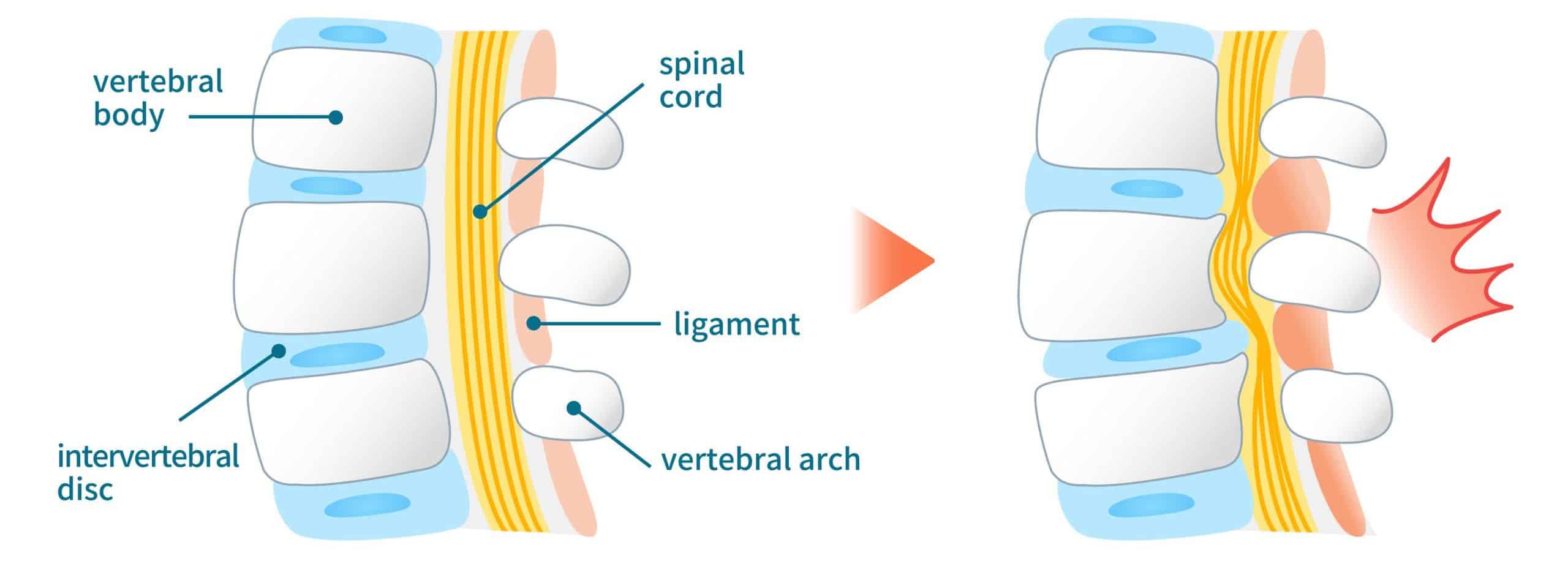
Illustration of lumbar spinal canal stenosis
Consequences of Untreated Lumbar Spinal Stenosis
If lumbar spinal stenosis is left untreated, the condition can progressively worsen over time. The persistent compression of the spinal nerves can lead to chronic pain and discomfort, impacting your everyday life and limiting your mobility. In severe cases, neurological issues such as weakness or numbness in the legs can intensify, and in some instances, untreated LSS may lead to loss of bladder or bowel control.
The continuous stress on the spine can also exacerbate the wear and tear of vertebral components, potentially leading to more serious spinal conditions. It's essential to seek professional medical attention if you suspect you have LSS. Timely treatments, such as Vertiflex, can help alleviate symptoms, manage the condition effectively, and improve your mobility.
Who is a candidate for a Vertiflex Spacer?
When you come to us with the burden of lumbar spinal stenosis, we make it our mission to guide you toward a more comfortable and active life. Our consultation process at Pain and Spine Specialists is thorough and personalized to ensure we understand your unique situation and can recommend the most effective treatment options, such as the Vertiflex spine implant.

At Pain and Spine Specialists, our team is here to guide you every step of the way, providing compassionate care and expert medical advice.
Traditional Treatment Options for LSS
When it comes to managing lumbar spinal stenosis, there are traditional treatment options available, such as physical therapy, medication, and surgery. However, these methods may not be suitable for everyone and can come with limitations and drawbacks.
A few traditional treatment options for LSS are:
- Physical Therapy: While physical therapy can help improve mobility and strengthen muscles, it may not provide long-lasting pain relief for all patients with LSS.
- Medication: Pain medications can offer temporary relief but may have side effects and become less effective over time. Prolonged use can also lead to dependency or other health issues.
- Surgery: Surgical procedures, such as spinal decompression or fusion, can provide significant relief for some patients. However, these invasive surgeries come with risks, including lengthy recovery times, potential complications, and loss of spinal flexibility.
Explore Our Webinars and Podcasts
Learn about The Conditions We Treat and the treatments We offer from our board-certified doctors.

Vertiflex Procedure Overview
A Vertiflex spacer reduces pressure on compressed nerves, providing lasting pain relief without needing bone or tissue removal. As a minimally invasive procedure, patients can go home the same day and maintain their range of motion in their lower back.
An overview of the preparation steps, the procedure, and the post-procedure experience:
Preparing for the Procedure
We will provide you with detailed instructions tailored to your health profile. You may be asked to adjust or stop certain medications temporarily. It's crucial to follow these guidelines closely to ensure the best possible outcome. On the day of the procedure, dress comfortably and arrange for a trusted person to accompany you.
The Vertiflex Implant Procedure
During the outpatient procedure, you'll be comfortably positioned while our team administers local anesthesia. This is to ensure you feel minimal discomfort during the procedure.
Once the anesthesia takes effect, your doctor will insert a small tube through a small incision in your back. Through this tube, the Vertiflex device, a small spacer, is carefully placed between the vertebrae where the narrowing has occurred. This spacer gently opens up the space within your spinal canal, relieving the pressure on your nerves, which is often the cause of your pain.
Throughout the procedure, we will use X-ray guidance to ensure the precise placement of the device. This real-time imaging allows us to make adjustments if needed and confirms the successful positioning of the spacer.
Considered a micro-surgery, the Vertiflex procedure usually only takes 15-45 minutes depending on if the patient has either one or two spacers implanted. Once implanted, the device has arms that open in the spinous process, preventing the implant from becoming dislodged.
Post-Procedure Experience:
Immediately following the procedure, you'll spend a short time under observation as the anesthesia wears off. During this period, our team will monitor your vitals and ensure you're ready to go home.
Remember to arrange for transportation home after your procedure, as driving is not recommended due to the effects of anesthesia. Once home, rest and follow the post-procedure care instructions provided by your doctor.
Vertiflex Procedure Side Effects, Recovery, and Risks
Our dedicated pain management doctors will closely monitor your Vertiflex recovery progress. Through regular check-ups and ongoing communication, we ensure the treatment is effective and you are healing as expected.
In most cases, patients experience significant pain relief almost immediately after the procedure. However, everyone's body responds differently, and it may take a few days or weeks for you to feel the full benefits.
There may be minimal soreness at the incision site, and it is recommended to avoid strenuous activity for roughly six weeks after the Vertiflex placement. However, light exercise is okay.
Understanding Potential Risks
Like any medical procedure, the Vertiflex process does carry some risks, though they are generally rare. It's important to understand these potential complications so you can make an informed decision about your treatment.
- 1One potential risk is infection, although this is a very rare occurrence. To mitigate this risk, we adhere to strict sterilization protocols during the procedure and provide clear post-procedure care instructions to prevent infection at the incision site.
- 2Bleeding is another possible complication, as is the case with any surgical procedure. Our experienced medical team closely monitors patients to manage this risk effectively.
- 3In rare cases, the placement of the Superion implant could lead to a fracture of the spinous processes of your vertebrae. We use real-time imaging during the procedure to ensure precise placement and minimize this risk.
- 4There's also a small chance that the implant could become dislodged. To prevent this, we provide detailed post-procedure guidelines to help you protect the surgical area and maintain the position of the implant.
- 5In patients with osteoporosis, there might be a risk of the bone settling around the implant.
It's crucial to discuss Vertiflex side effects and risks with our doctors. Together, you can weigh these risks against the potential benefits of the Vertiflex Procedure to decide on the best course of action.
Alternative Treatments
If the Vertiflex treatment does not provide you with adequate relief, you are not at a dead end. There are many other paths to explore on your way towards a life free from pain.
Alternatives to Vertiflex for addressing pain from LSS include:

Advantages of Vertiflex Treatment
When it comes to treating lumbar spinal stenosis and chronic back and leg pain, Vertiflex spacers offer a range of benefits that make it an attractive alternative to traditional treatment options.
Faster Recovery Time
Vertiflex's minimally invasive approach allows patients to go home the same day with minimal soreness at the incision site. A shorter recovery period means you can return to your daily life sooner.
Lower Risk of Complications
The Vertiflex procedure doesn't require the removal of bone or tissue, minimizing blood loss and reducing the risk of complications compared to traditional surgical options.
Improved Mobility and Functionality
Patients often experience noticeable improvements in mobility and functionality, preserving their range of motion in the lower back.
Maximized Pain Relief
The Vertiflex implant is designed to remain in place and stay open, alleviating pressure on compressed nerves for lasting pain relief.
The Vertiflex Procedure has provided pain relief for over 20,000 patients. - University of Florida
Of patients reported improvement in back pain following the Vertiflex Procedure. - Boston Scientific
Patients have reported a 90% satisfaction rate after the Vertiflex Procedure. - Boston Scientific
Discover Lasting Relief with Vertiflex Treatment
Vertiflex treatment offers an effective, minimally invasive solution for lumbar spinal stenosis (LSS) and other chronic back and leg pain conditions. With its numerous benefits, such as minimized blood loss, maximized pain relief, and noticeable improvement in mobility and functionality, Vertiflex provides a patient-centered approach to pain management.
Frequently Asked Questions
Explore some of the most common questions we receive about Vertiflex treatment at Pain and Spine Specialists.
Vertiflex treatment has a high success rate in providing lasting pain relief for patients with LSS. According to a study published in the Journal of Pain Research, 90% of patients reported satisfaction with the Vertiflex Procedure.
Compared to traditional options like physical therapy, medication, or surgery, Vertiflex is a minimally invasive procedure with a faster recovery time, lower risk of complications, and effective pain relief. Patients can go home the same day and preserve their range of motion in the lower back.
There are no specific age restrictions for Vertiflex treatment. However, it's important to consult with your doctor to determine if you're a suitable candidate based on your overall health, medical history, and the severity of your LSS symptoms.
After the Vertiflex procedure, patients may experience minimal soreness at the incision site. You should avoid strenuous activity for about six weeks but can engage in light activity. Your doctor will provide specific post-procedure care instructions tailored to your needs.
As with any medical procedure, there are potential risks and side effects. These may include infection, bleeding, or reactions to anesthesia. However, Vertiflex's minimally invasive approach reduces the likelihood of complications compared to traditional surgical options.
The Vertiflex implant is designed to maintain spinal stability while providing pain relief. However, it's essential to follow your doctor's post-procedure care instructions and avoid strenuous activities during the recovery period to minimize the risk of instability.
Patients who undergo Vertiflex treatment can expect significant pain relief and improved mobility, as the implant relieves pressure on compressed nerves. The level of relief may vary based on individual factors, but many patients report noticeable improvements shortly after the procedure.
Many insurance providers cover treatment, but Vertiflex insurance coverage may vary depending on your specific plan. It's important to consult with your insurance provider and doctor's office to determine coverage and any out-of-pocket expenses.
Yes, the Vertiflex procedure is FDA-approved. The Vertiflex Superion Indirect Decompression System received FDA approval in May 2015 as a safe and effective treatment for lumbar spinal stenosis. Always verify the status of FDA approval when exploring medical treatment options.
While you should avoid strenuous activities for approximately six weeks after the Vertiflex procedure, light activity is encouraged. Your doctor will provide personalized guidance on when it's safe to resume your normal activities based on your individual circumstances and recovery progress.
To find Vertiflex doctors near you, you can visit the official Vertiflex website and use their Find a Doctor tool. You can also consult with your primary care physician or other healthcare providers for referrals to board-certified pain specialists who offer treatment in your area.
Vertiflex Treatment at Pain and Spine Specialists of Maryland, Pennsylvania, and Virginia
If you're ready to explore Vertiflex spinal implants, we encourage you to schedule a consultation with one of our board-certified pain specialists. During your initial consultation, we will evaluate your current health condition, medical history and review any previous imaging to determine whether Vertiflex is the right choice for you.


About Us
At Pain and Spine Specialists, we provide comprehensive pain management and offer the most advanced, minimally invasive techniques, including The Vertiflex spinal spacer. You can trust us to reduce your pain, restore your quality of life, and support you every step of the way.
Digital Guide
View our providers, locations, services, and patient reviews.
More Resources
Here is a list of resources that were discussed on this page:
Treatment Candidates
Patients with the following conditions may be candidates for an Vertiflex Treatment:
Related Pain Regions
Vertiflex Treatment is often used to treat pain in the following regions:

Find a Location
If you are searching for "Vertiflex Treatment near me" then click button to search by zip-code.
Contact Us
Stop tolerating your pain, hoping it will go away on its own. Contact us today to minimize your pain!

Schedule Appointment

Ask A General Question
Ask A Question

Billing / Insurance Question
Billing / Insurance

Cancel / Reschedule Request
Cancel / Reschedule
*We accept workers' comp and personal injury claim patients
*We accept workers' comp and personal injury claim patients
Appointment FAQ's
We Accept All Insurances!
That includes Medicare and state Medicaid.
Usually within one week of the initial call.
Appointments can be schedule by phone or through our contact form here.
At Pain and Spine Specialists we provide comprehensive pain care while offering the most up-to-date minimally invasive techniques. Our ethos is to treat each patient (and potential patient) as if they were a family member.
At Pain and Spine Specialists we want to provide the most efficient and pleasurable experience possible. As in all medical facilities, we have certain policies in place to ensure that you receive the time you require to address your needs as well as enhance your experience while in our care.
We encourage patient feedback to better improve your experience. We strive to create a friendly and warm environment where patients feel their voices are heard and validated.
Meet Our Team
Vertiflex Treatment Specialists in Maryland, Pennsylvania, Florida and Virginia
At Pain and Spine Specialists, our board-certified doctors boast over 20 years of experience in pain management, specializing in cutting-edge treatments like Vertiflex for lumbar spinal stenosis and other chronic back and leg pain conditions. Our dedicated team, including physician assistants and nurse practitioners, is committed to providing personalized, minimally invasive treatment options across Maryland, Pennsylvania, and Virginia.
We understand that each patient's needs are unique, which is why we take the time to get to know you and your specific health concerns. From there, we develop customized treatment plans that accurately diagnose conditions and treat the root cause of your pain with lasting results.