Complex Regional Pain Syndrome Treatment
In Maryland, Pennsylvania, Florida and Virginia
Complex regional pain syndrome (CRPS) is a neurological condition, often caused after injury or surgery, that results in severe chronic pain in the extremities. Although the cause of CRPS is not fully understood, early diagnosis and treatment can help alleviate pain, restore function, and improve your quality of life.
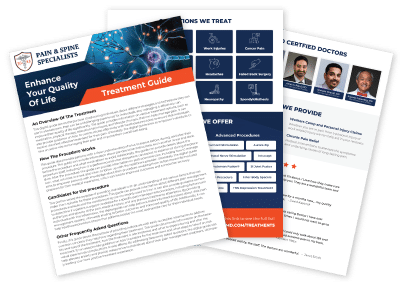
Digital Guide
Treatment overview and more!
How We Treat complex regional pain syndrome
Complex regional pain syndrome (CRPS) affects a significant portion of the population, with statistics indicating that up to 200,000 people are currently grappling with this condition in the United States. This neurological disorder, often triggered by trauma or surgery, predominantly impacts the extremities, causing severe chronic pain, skin changes, and other debilitating symptoms.
Learn more about the causes, symptoms, and various treatment approaches for CRPS by using the navigation buttons below. Knowledge is power, and being informed about your condition is the first step toward recovery.
If you are interested in scheduling a new patient consultation with us, you can reach out to us through our contact form. Our dedicated team of complex regional pain syndrome doctors at Pain and Specialists are ready to guide you on your journey toward pain management.


What Patients Are Saying
Great office, good people. Been there quite a few years. Never a problem. Leave them a message, they always respond. I've had six back surgeries 2knees and right shoulder. Gregg keeps my chronic debilitating pain managed well so I can still live my life best I can. Im so grateful.
Jenny Martins / google review
Dr. Rao. I can't find the words to tell you how much he has meant to me. I followed him from an old practice to his very new high tech office. They offer so many different areas of assistance to those with issues from nutrition to spinal surgery... and much more. His office is professional.
Mom To2 / vitals
Dr. Rao is such an amazing doctor! During my first visit, he never tried to rush through my appt.; he genuinely listened to all my concerns and then took his time to explain to me in detail all his recommendations and how they would help me.
Nikki / healthgrades
Digital Treatment Guide
Digital Guide
Download our comprehensive digital guide on complex regional pain syndrome treatment guidelines, provider information, treatment locations, and answers to frequently asked questions.

More Resources
Access to our Complex Regional Pain Syndrome guide, pain quiz, FAQ's, and patient reviews.


We Accept All Insurances
Individualized Patient Care
Board Certified Doctors
Seen Within Two Weeks
What Is Complex Regional Pain Syndrome?
Complex regional pain syndrome is a condition that causes pain, changes in skin color and texture, and other symptoms in a particular part of the body, often the extremities. Pain from CRPS is often experienced in the arm, leg, hand, or foot.
There is currently no known cause for complex regional pain syndrome. However, it is believed that CRPS originates from a dysfunction in your central or peripheral nervous systems. Your central nervous system is your brain and spinal cord, while your peripheral nervous system relays the information from your brain and spinal cord to your organs, arms, legs, fingers, and toes.
It is believed that the sensitivity to the pain you feel in your extremities can result from the overreaction of the pain signals that your body can't turn off. CRPS can go away on its own and potentially last a short period. However, CRPS symptoms can be long-term (over six months), and symptoms can reoccur.
It's estimated that about 10% to 30% of people who initially experience CPRS experience a recurrence. The cause for the recurrence is unknown. Therefore, seeking early, effective pain management treatment options is essential to improve your CRPS symptoms.
Complex regional pain syndrome types
CRPS is characterized by severe, often burning, pain that typically affects one limb, such as arm, leg, hand, or foot. There are two subtypes of complex regional pain syndrome.
An overview of CRPS type 1 vs type 2 includes:
Type 1 CRPS
Type 1 complex regional pain syndrome, previously known as reflex sympathetic dystrophy (RSD), occurs after an illness or injury that didn't directly damage the nerves in the affected limb. Despite this, the pain is significantly disproportionate to the severity of the initial injury. About 90% of people with CRPS have Type 1.
Type 2 CRPS
Complex regional pain syndrome type 2, formerly known as causalgia, is less common and occurs after a distinct nerve injury. The nerve injury could be due to a fracture, surgery, or any trauma that directly affects the nerve in the impacted area.
Both types of CRPS are characterized by prolonged or excessive pain and changes in skin color, temperature, or swelling in the affected area. Other common symptoms include changes in skin texture, abnormal sweating, changes in nail and hair growth patterns, stiffness in affected joints, problems coordinating muscle movement, and abnormal movement in the affected limb.


Complex Regional Pain Syndrome Causes
Although the exact cause of CRPS is unknown, researchers think CRPS results from a dysfunction in your central or peripheral nervous systems. Furthermore, 90% of CRPS cases result from nerve trauma or injury to the affected limb before CRPS symptoms develop.
While this doesn't account for the cause of the 10% of cases of people who seemingly develop CRPS without exact reason, this does suggest that severe physical trauma or injury can play a role in developing CRPS.
Injuries that are linked to CRPS are:
CRPS Risk Factors
There are specific risk factors that may increase your chance of developing CRPS. These risks include:
Other demographic trends in CRPS cases include the condition being more common in adults, typically about 40 years of age, than children. Complex regional pain syndrome also affects more females than men.
Females are affected at least three times more often than males. - American Family Physician
CRPS has been estimated to occur in about 7% of patients after trauma or surgery. - ScienceDirect
With CRPS report a spread of symptoms from the initial site. - NIH
Prevention & Risks to Avoid
Although the root cause of CRPS remains largely unknown, several preventative measures are recommended to lower your risk of CRPS. For instance, lifestyle factors like smoking and poor management of health conditions such as diabetes can prevent your nerves from healing efficiently.
Meanwhile, taking Vitamin C before surgery or after a wrist fracture is believed to prevent CRPS. Also, early mobilization after a stroke like getting out of bed and walking around can lower your risk of developing CRPS.
Complex regional pain syndrome symptoms
It's essential to seek treatment as soon as possible to improve your CRPS symptoms. Some of the common symptoms of CRPS include:
Although symptoms vary individually, key symptoms like pain, swelling, and temperature sensitivity are common CRPS symptoms that first appear.
As the condition develops, symptoms like the affected area appearing pale and cold to the touch, noticeable skin or nail changes, and muscle spasms are all later symptoms that can occur if left untreated. Unfortunately, once these later symptoms develop, they are typically irreversible. Therefore, early treatment is crucial.
It is also important to note that CRPS can be acute, meaning short-term, or chronic when symptoms last over six months. No matter if your symptoms disappear, seeing your healthcare provider to help improve your symptoms early on is essential.

Complex regional pain syndrome or CRPS as painful condition outline diagram. Labeled educational arm or leg swelling cycle with body response vector illustration. Sympathetic nervous system impulse.
Complex regional pain syndrome stages
CRPS stages and symptoms, if left untreated, can develop into worsening symptoms that can leave irreversible damage to your body. That's why seeking treatment as early as possible is critical to living a happy, healthy life.
Since CRPS is rare, it can be difficult to spot all the signs and symptoms of the condition accurately. Below are the stages of CRPS symptom development to be aware of as the condition progresses:
CRPS Stage 1 (1-3 Months After the Initial Onset of CRPS)
CRPS Stage 2 (3-6 Months After the Onset of CRPS)
CRPS Stage 3 (6 months After the Onset of CRPS)
Often, after the six-month mark of suffering from CRPS symptoms, changes are permanent.
Complications of CRPS
If complex regional pain syndrome is left undiagnosed and untreated, the symptoms inevitably worsen and can progress to life-altering symptoms like:
Spread of Condition: CRPS symptoms can spread from a localized area of the body to become more widespread if left untreated.
Tissue Wasting (Atrophy): Atrophy is the deterioration of the skin, bones, and muscles due to a lack of movement in the affected area. This lack of movement is because of the pain or stiffness felt when you attempt to move that area of the body.
Muscle Tightening (contracture): Contracture is the tightening of the muscles such that the affected area becomes contracted into a fixed position, resulting in a lack of normal movement.
Explore Our Webinars and Podcasts
Learn about The Conditions We Treat and the treatments We offer from our board-certified doctors.

Complex Regional Pain Syndrome Diagnosis
CRPS is rare; therefore, this condition is often misdiagnosed. No clear identifier can be done to diagnose CRPS. At Pain and Spine Specialists, we understand the complexities of diagnosing Complex regional pain syndrome. Our diagnostic approach is comprehensive, patient-centered, and rooted in the latest medical advancements to ensure accurate diagnosis and effective treatment planning.
The Steps to Our CRPS Diagnostic Criteria Are:
- 1In-Depth Review of Your Medical History: Understanding your past health experiences, previous treatments, and lifestyle provides us with valuable context about your condition. This step is essential as it helps us identify any potential triggers or contributing factors to your CRPS.
- 2Physical Examination: We perform a hands-on assessment which allows us to observe and evaluate any visible symptoms, such as changes in skin color, swelling, or abnormal temperature changes in the affected area, which are indicative of CRPS.
- 3Diagnostic imaging techniques: Our diagnostic imaging techniques include X-rays, MRI, or CT scans. These tools provide us with detailed images of your body's internal structures, assisting us in identifying any abnormalities that might be linked to CRPS.
- 4Nerve Tests: In certain cases, nerve tests might be necessary. These tests help us gauge the function of your nerves and can be crucial in understanding the extent of nerve damage, if any.
- 5Diagnostic Nerve Blocks: Finally, for some patients, we might employ diagnostic nerve blocks. These include procedures like facet joint injections, epidural steroid injections, sacroiliac (SI) injections, and medial branch blocks. These procedures allow us to isolate specific nerves and assess their role in your pain symptoms.
Each step in our diagnostic process is crucial in crafting an individualized and effective treatment plan for CRPS.
Complex Regional Pain Syndrome Treatment
There is no cure for CRPS. Yet, a wide variety of treatment options can help relieve your CRPS symptoms, slow down the progression of the disease, and ultimately help the individual manage their pain better to get back to leading a productive, healthy life. Noninvasive treatment options are often the first course of action to reduce CRPS symptoms:

Minimally Invasive complex regional pain syndrome medical procedures
For advanced care, we utilize state-of-the-art interventional procedures. These procedures include:
- Spinal Cord Stimulation: Spinal cord stimulation involves the implantation of a small device that sends electrical impulses to the spinal cord, interrupting pain signals before they reach the brain. This minimally invasive procedure has shown promising results for many CRPS patients who have not found relief through other treatments. You can find more details in our last blog about SCS treatment for CRPS.
- Intrathecal Pump: An intrathecal pump is a device that delivers pain-relief medication directly to the spinal fluid. This method can provide targeted relief and may be considered for patients who do not respond well to oral medications or other treatments.
- Radiofrequency Ablation: Radiofrequency ablation involves using heat generated by radio waves to disrupt pain signals in specific nerves. While it is primarily used for other conditions like chronic back pain, it may be considered for CRPS patients if deemed appropriate by a complex regional pain syndrome specialist.
- Peripheral Nerve Stimulation: Similar to spinal cord stimulation, peripheral nerve stimulation uses electrical impulses to block pain signals from specific nerves. This treatment can be an option for CRPS patients who have localized pain and have not found relief through other methods.
Complex regional pain syndrome nerve block Injections
Nerve blocks are injections of local anesthetics or other medications that block pain signals from specific nerves. These treatments can provide temporary relief from CRPS symptoms and may be combined with other therapies for optimal results.
- Trigger Point Injections: Trigger point injections involve injecting a local anesthetic or corticosteroid into tight muscle knots that contribute to pain. While these injections are typically used for muscle pain, they may provide relief for some CRPS patients with muscle-related symptoms.
- Stellate Ganglion Block: This involves injecting a local anesthetic near the stellate ganglion, a cluster of nerves in the neck. It can disrupt pain signals from reaching the brain, providing relief from CRPS symptoms.
- Epidural Steroid Injection: This procedure involves injecting a steroid into the epidural space of the spinal cord. The steroid can reduce inflammation and swelling, alleviating nerve pain.
- Lumbar Sympathetic Block: This procedure involves injecting medication around the sympathetic nerves in the lower back. This can help alleviate pain in the lower extremities related to CRPS.
Conventionial Treatment of Complex Regional Pain Syndrome
Alongside our injections and advanced procedures, we incorporate conventional therapies into our care plans.
- Medication Management: Complex regional pain syndrome medication can help relieve CRPS symptoms. This treatment approach can include both prescription drugs and non-prescription pain medication. Examples of common medications include steroids to reduce inflammation, drugs to reduce the progression of bone loss, and antidepressants.
- Referrals to Physical Therapy: Complex regional pain syndrome physical therapy in learning guided exercises to improve your affected area's mobility and flexibility is another common treatment option.
Complex regional pain syndrome alternative treatments
In addition to conventional medical therapies, some patients may benefit from alternative treatments for crps such as Acupuncture. We partner with Shakthi Health and Wellness Center to give patients more alternative options for CRPS treatment:
- Counseling or Talk Therapy: Complex regional pain syndrome therapy can help with depression and anxiety accompanying those suffering from CRPS.
- Transcranial Magnetic Stimulation (TMS): TMS is a noninvasive procedure uses magnetic fields to stimulate nerve cells in the brain, which can help alleviate pain symptoms in CRPS patients.
- Acupuncture: Acupuncture is a traditional Chinese medicine technique involves inserting thin needles into specific points on the body, which is believed to help relieve pain.
Frequently Asked Questions
You should consider seeing a neurologist, an orthopedic specialist, a rheumatologist, and most importantly, a pain management specialist who has experience with CRPS.
You should see a doctor if you experience persistent, severe pain that affects a limb and makes touching or moving that limb seem intolerable. Early diagnosis and treatment are key to preventing CRPS from worsening.
A pain specialist can provide comprehensive care tailored to your specific needs. They can offer various treatment options, such as medications, physical therapy, and minimally invasive procedures like nerve blocks or spinal cord stimulation.
Coverage varies by insurance provider and plan. It's important to check with your insurance company to understand what treatments are covered.
You can use online resources like the American RSDHope's list of CRPS treatment centers, or the Reflex Sympathetic Dystrophy Syndrome Association's physician directory. Always check the qualifications and reviews of the center before making a decision.
Your primary care physician may be able to recommend specialists in your area. Additionally, online databases such as Healthgrades or the American Medical Association's DoctorFinder can be useful resources.
Minimally invasive treatments often have less risk, less pain, and quicker recovery times than traditional surgery. They can also often be performed on an outpatient basis.
Complex regional pain syndrome is divided into three stages. Stage 1 typically involves swelling, extreme sensitivity to touch, and changes in skin temperature or color. In Stage 2, the affected area can become stiff and weak, leading to joint contractures (uncontrolled muscle movements). Finally, in Stage 3, severe chronic pain and atrophy of muscles may occur.
First-line treatments often include medications such as non-steroidal anti-inflammatory drugs (NSAIDs), corticosteroids, or anticonvulsants. Physical therapy is also usually recommended.
If first-line treatments are not successful, doctors might consider more aggressive treatments such as nerve blocks, spinal cord stimulation, or other minimally invasive advanced procedures.
Our Approach to Treating CRPS
At Pain and Spine Specialists, we believe in a comprehensive approach to managing your pain. We are proud to be a team of experienced professionals that is committed to providing you with the highest level of care, tailored specifically to your unique needs.
Our approach to treatment is grounded in a deep understanding of the complex nature of pain and its many sources. We recognize that each patient's experience with pain is unique, and our goal is to develop a personalized treatment strategy that addresses your specific needs and improves your quality of life.
We are skilled in a range of treatment modalities, from traditional medical treatments to advanced interventional procedures. We also recognize the role of alternative therapies in complex regional pain syndrome management and collaborate with our partners at Shakthi Health and Wellness Center.
Whether you're suffering from acute or chronic pain, our team is dedicated to helping you get back to living life with less pain and more joy. If you believe you may be suffering from CRPS, please contact us today for a comprehensive evaluation.


About Us
At Pain and Spine Specialists, our board-certified doctors are dedicated to providing minimally invasive treatments, including expert care for Complex Regional Pain Syndrome. We strive to alleviate your pain and restore your quality of life.
Digital Guide
View our providers, locations, services, and patient reviews.
More Resources
Here is a list of resources that were discussed on this page:
Treatment Options
Patients diagnosed with Complex Regional Pain Syndrome may be good candidates for the following treatments.
Common Causes
Complex Regional Pain Syndrome is often caused by the following conditions.
Types of Pain
Complex Regional Pain Syndrome often causes the following types of pain.

Find a Location
If you are searching for "Complex Regional Pain Syndrome treatment near me" then click button to search by zip-code.
Contact Us
Suffering from CRPS? Let our expert CRPS specialists help. Contact us today for personalized treatment!

Schedule Appointment

Ask A General Question
Ask A Question

Billing / Insurance Question
Billing / Insurance

Cancel / Reschedule Request
Cancel / Reschedule
*We accept workers' comp and personal injury claim patients
*We accept workers' comp and personal injury claim patients
Appointment FAQ's
We Accept All Insurances!
That includes Medicare and state Medicaid.
Usually within one week of the initial call.
Appointments can be schedule by phone or through our contact form here.
At Pain and Spine Specialists we provide comprehensive pain care while offering the most up-to-date minimally invasive techniques. Our ethos is to treat each patient (and potential patient) as if they were a family member.
At Pain and Spine Specialists we want to provide the most efficient and pleasurable experience possible. As in all medical facilities, we have certain policies in place to ensure that you receive the time you require to address your needs as well as enhance your experience while in our care.
We encourage patient feedback to better improve your experience. We strive to create a friendly and warm environment where patients feel their voices are heard and validated.
Meet Our Team
Complex Regional Pain Syndrome Specialists in Maryland, Pennsylvania, Florida and Virginia
With over 20 years of experience, our board-certified pain specialists are dedicated to helping CRPS patients regain control of their lives. We understand that each individual is unique, and our team, including physician assistants and nurse practitioners, works closely with you to develop a personalized treatment plan tailored to your specific needs.